Key Components and Technical Parameters
Material of scraper:
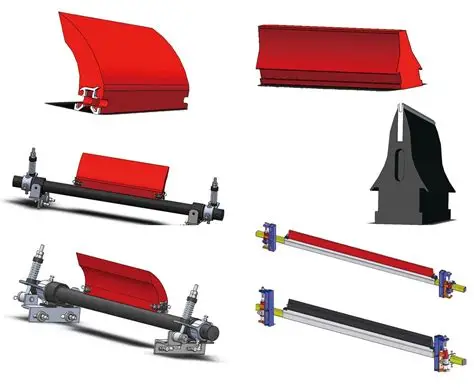
Alloy blade (e.g. tungsten carbide): high hardness, suitable for removing dry materials, but avoid scratching the conveyor belt;
Polyurethane/rubber: good elasticity, do not hurt the belt surface, suitable for fine sweeping.
Installation angle:
The angle between scraper and conveyor belt is usually 15°-30°, and the adjustable bracket can adjust the fit according to the wear condition.
Sweeping efficiency:
high quality sweeper can reduce the amount of residual material to below 0.1kg/m², avoiding secondary pollution and equipment failure.
Application Scenario
Mining Conveyor: Remove iron ore powder and coal sludge on the conveyor belt to prevent the transfer point from clogging and the belt from running out.
Harbor terminal: clean the gravel and mineral powder on the conveyor belt of container terminal to improve the loading and unloading efficiency.
Coal conveyor of power plant: remove coal dust on coal conveyor belt, reduce dust emission and equipment wear.
Food processing: Adopt food grade polyurethane sweeper to remove cookie crumbs, flour, etc., which meets the sanitary standard.
Selection and maintenance suggestions
Selection according to material characteristics:
dry large particles (such as ore, coal): preferred alloy rubber sweeper + polyurethane secondary sweeping;
wet viscous fine powder (such as clay, cement): choose rotary sweeper or hydraulic sweeper with scraper.
Maintenance points:
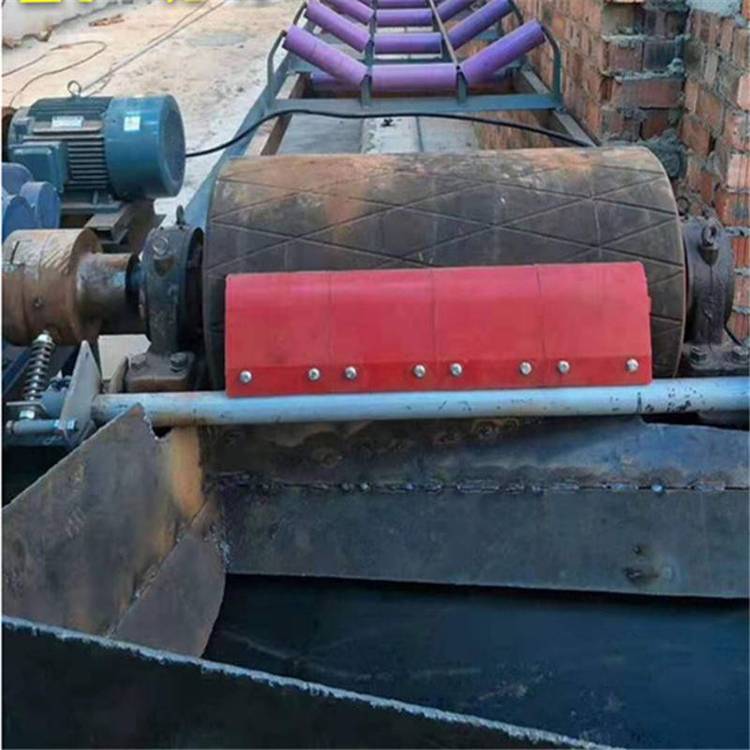
Regularly check the wear of the scraper (wear more than 50% need to be replaced), to avoid the metal skeleton scratching the belt;
Adjust the tensioning device to maintain uniform contact pressure between the scraper and the belt surface (usually 0.5-1MPa);
The metal bracket in the humid environment needs to be treated with antirust treatment, and the food industry needs to disinfect the contact surface of the sweeper regularly.
Typical Application Value
Efficiency Improvement: Reduce the belt deflection caused by material residue, reduce the frequency of downtime and maintenance, and improve the continuous operation time of the system.
Cost Savings: Extend belt life (belt wear is 3-5 times faster when not swept) and reduce maintenance costs.
Environmental compliance: Control dust and material spills, meet environmental emission standards (e.g. dust emission ≤ 10mg/m³).