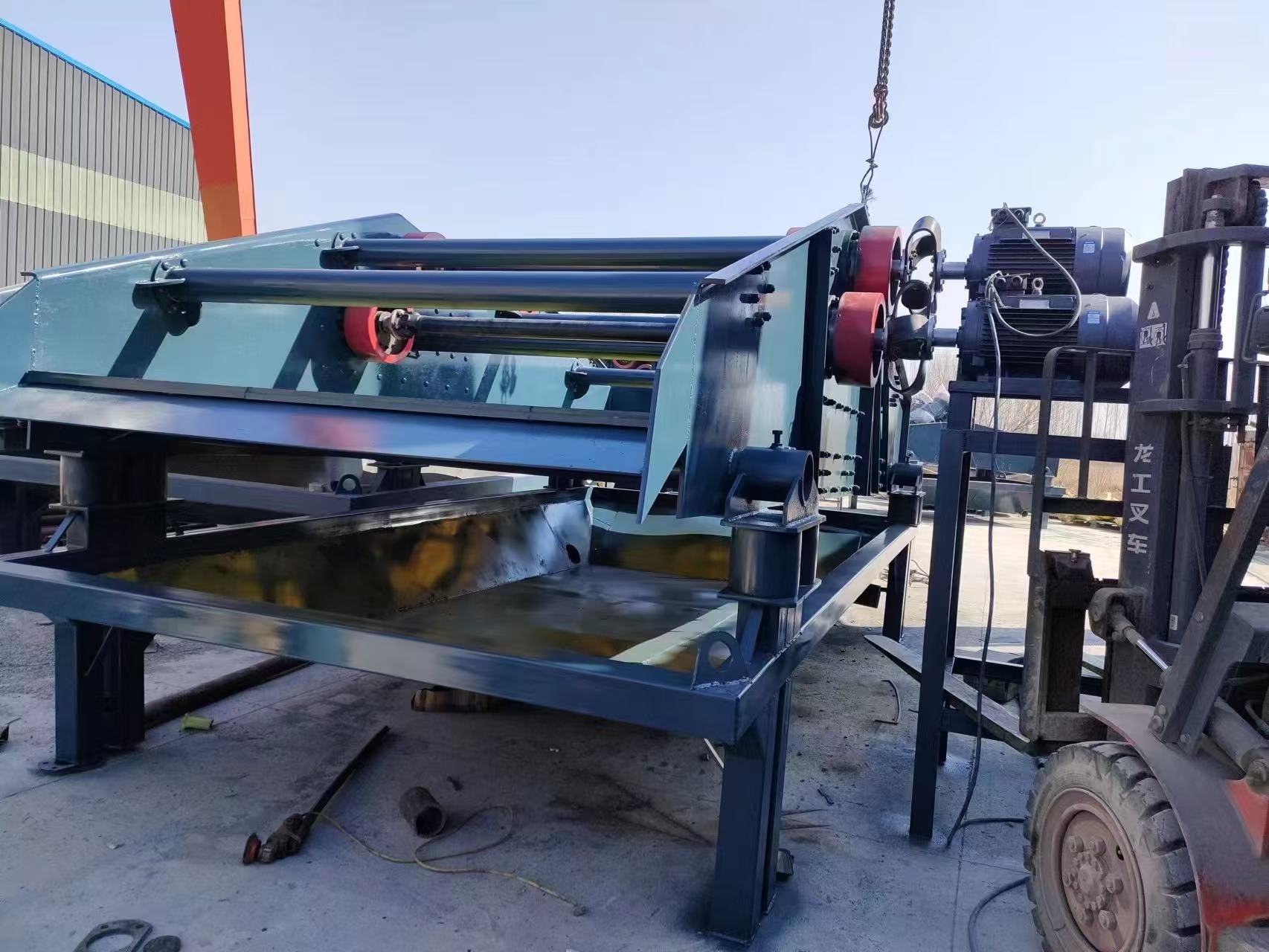
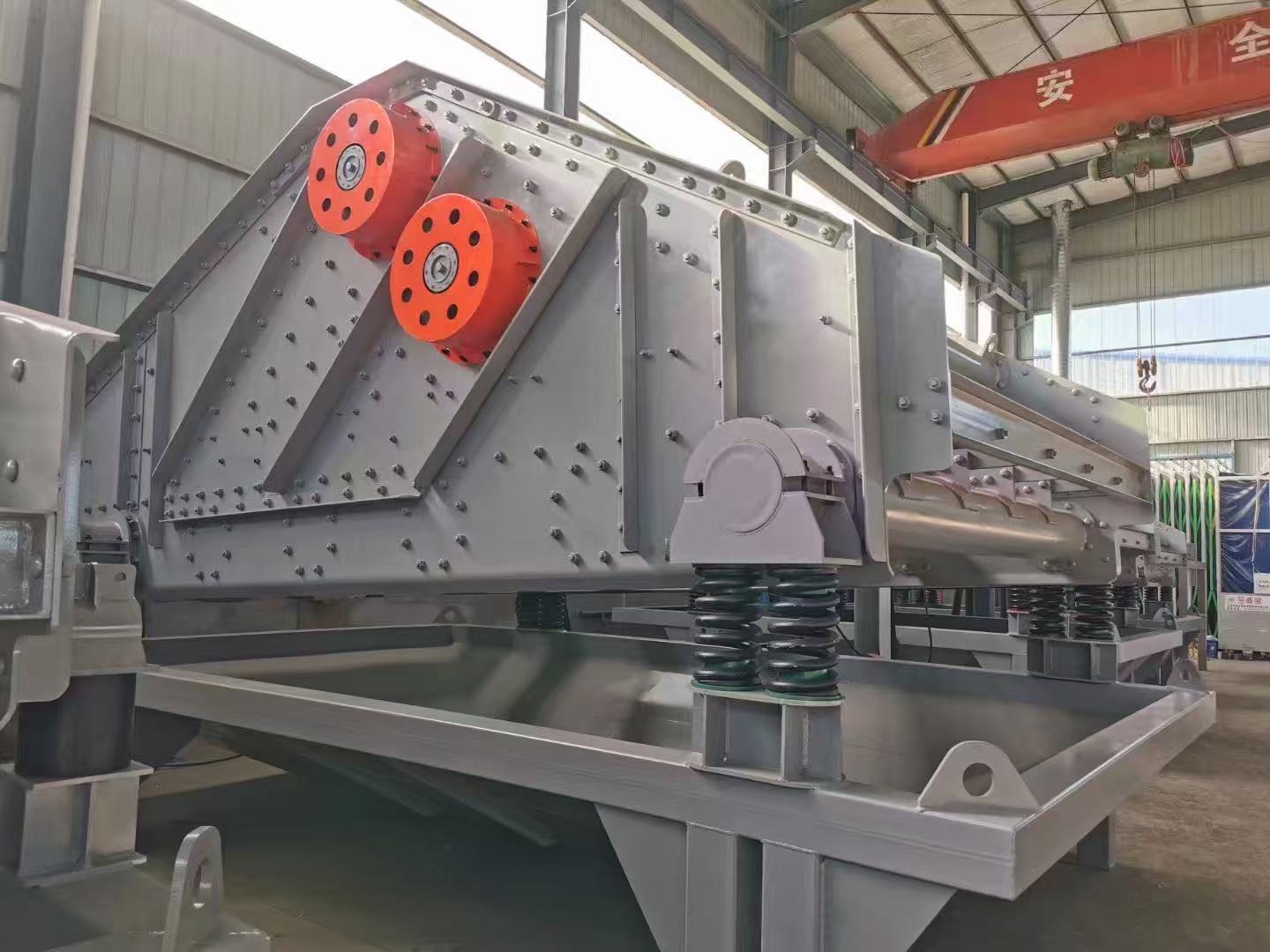
Core Structure and Working Principle
Key Components:
Sieve Box: the main frame carrying the screen mesh, mostly welded or bolted with high-strength steel plate;
Vibration Source: motor driven eccentric block, vibration motor or electromagnetic device to generate vibration;
Shock Absorption Device: spring or rubber mat to reduce the impact of vibration on the foundation;
Sieve Mesh: stainless steel, manganese steel or polyurethane, according to the screening accuracy of the different aperture selection.
Working Principle:
vibration source drives the screen box to do reciprocating linear, circular or elliptical motion, the material on the screen surface by the vibration jump forward, fine grain level falls through the screen holes, and the coarse grain level is discharged from the end of the screen surface to realize the grading.Technical Parameters and Performance Advantages
Key Parameters:
Screening efficiency: up to 95% or more (depending on the material characteristics and screen precision);
Processing capacity: 5-500 tons / hour, large circular vibrating screen can be adapted to the high production line of mines;
Vibration frequency: usually 15-25Hz, high-frequency vibration is suitable for fine-grained screening.
Performance advantages:
high screening accuracy: screen mesh aperture standardization, can control the screening particle size error within ±5%;
anti-clogging design: elliptical vibration or bouncing ball cleaning device to reduce the wet material clogging (eg, coal slurry, quartz sand);
energy-saving and low-consumption: the vibration motor energy consumption is more than 30% lower than that of the traditional eccentric wheel drive.
Application areas
Mining industry: iron ore, quartz sand crushing particle size classification, separation of qualified materials and return materials;
Building materials industry: concrete aggregate (5-31.5mm) screening, removal of mud content in sand;
food and medicine: flour, sugar powder sieving and removal of impurities, tablet particle classification (80-325 mesh);
environmental protection engineering: construction waste screening and recycling, sludge dewatering treatment (with the use of dewatering screen).
Selection and maintenance points
Selection basis:
Material characteristics: particle size range, moisture content, hardness (such as granite selection of manganese steel mesh, flour selection of stainless steel mesh);
Capacity requirements: large production line selection of circular vibrating screen, small and medium-sized batch selection of rotary vibrating screen or linear screen.
Maintenance suggestions:
regularly check the screen mesh tension (loose will lead to a decline in screening efficiency), and replace it in time when it is seriously worn;
vibration motor bearings are filled with grease every 2,000 hours to avoid burning at high temperatures;
the screen box in the humid environment needs to be rust-proof, and corrosion-resistant materials can be chosen from 316L stainless steel material.
Typical application cases
sand and gravel production line: circular vibrating screen sieves the crushed stone into 0-5mm, 5-10mm, 10-20mm and other specifications for concrete batching;
flour processing: rotary vibrating screen removes clumps and impurities in the flour to ensure that the finished products are uniform in fineness (e.g. 80 mesh, 100 mesh grading);
copper ore beneficiation: linear vibrating screen dewatering and screening the slurry after ball milling, and recovering copper concentrate Particles.